Why does my fuse box keep blowing fuses in Battleboro
A fuse that blows once is a warning. A fuse that blows every week is a circuit telling you something is wrong. Here's what's actually happening in Battleboro homes.
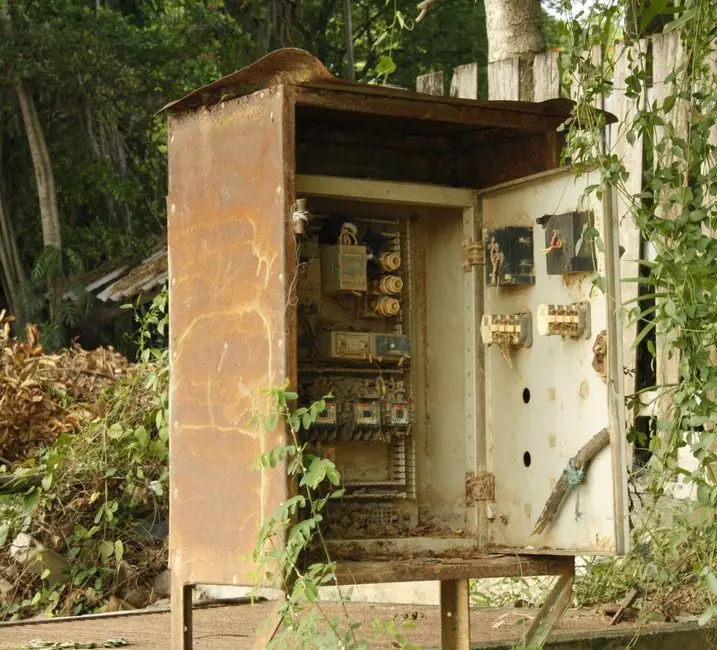
Your fuse box keeps blowing fuses in Battleboro because the circuit is drawing more current than the fuse is rated to carry, or because a fault somewhere on that circuit - a short, a failing appliance, a loose connection - is pushing current where it shouldn't go. In older Battleboro homes, worn fuse clips and undersized wiring make both problems worse. A fuse that blows once is a warning. A fuse that blows every week is a circuit telling you something is broken.
Below we walk through the actual causes we find on service calls around Battleboro, what it costs to fix in 2026, and when it makes more sense to stop replacing fuses and upgrade the box.
The short answer: your circuit is overloaded, shorted, or worn out
Why does my fuse box keep blowing fuses Battleboro NC is a question with three honest answers, and they all come down to current. A fuse is a deliberate weak link - a thin metal strip that melts at a set amperage to protect the wiring behind it. When it melts, it did its job. The question is why it had to.
Overload means you're asking one circuit to run more than it can handle. A 15-amp fuse on a circuit feeding a space heater, a window AC, and a hair dryer at the same time will blow every time. Short circuit means hot and neutral wires are touching somewhere they shouldn't, dumping current straight to ground. Worn equipment means the fuse box itself - the clips, the bus bars, the screw terminals - has aged past the point of reliable contact.
Fuse box repair in Battleboro is a service that fixes the circuit. It is not a service that fixes a 60-year-old panel that was never designed for the loads a modern house pulls.
Why does my fuse box keep blowing fuses in Battleboro NC?
Battleboro's housing stock is the biggest single reason this call comes in so often. A large share of homes here were wired between the 1940s and the 1970s, when a house ran on a 60-amp service and the biggest load in the building was an electric range. Today those same homes run central air, a heat pump, a tankless water heater, and a garage freezer - often on the original 60-amp service and the original fuse box.
The math hasn't changed. The loads have. A 60-amp service delivers 14,400 watts. Add a 4,500-watt heat pump, a 4,500-watt water heater, a 1,500-watt microwave, and a 1,200-watt hair dryer and you're at 11,700 watts before the lights come on. Push past the limit and something has to give - and the fuse is the something.
We also see a specific pattern in Battleboro's older rural properties: aluminum branch wiring from the late 1960s and early 1970s. Aluminum expands and contracts more than copper under load, and at fuse-box terminations that movement loosens connections over decades. A loose connection runs hot, and a hot connection is a fuse-blowing connection. If your home was built or rewired in that window, Aluminum Wiring Repair Rocky Mount NC is worth a look before you replace another fuse.
The five real reasons fuses blow over and over
When we open a fuse box that's been blowing repeatedly, the cause almost always falls into one of five buckets. Here's what each one looks like from the inside.
1. The circuit is genuinely overloaded
This is the most common and the easiest to confirm. You plug in a high-draw appliance - a portable heater, a vacuum, a microwave - and the fuse blows within seconds. The fuse isn't failing. It's doing exactly what a 15-amp fuse should do when you pull 18 amps through it.
Look at what's on the circuit. In older Battleboro homes, one 15-amp circuit often feeds two bedrooms, a hallway, and a bathroom. That was fine in 1965. It isn't fine when two people are running hair dryers and a space heater on the same January morning.
2. A short circuit somewhere on the run
A short blows the fuse the instant you reset it - sometimes with a pop or a flash at the box. Rodent damage in the attic, a nail through a cable during a renovation, a pinched wire behind a baseboard, or a failed appliance cord can all create a dead short. This is the one you should not keep resetting. A short that keeps getting fed current is how house fires start.
If you smell burning at the box or see scorch marks on the fuse clips, stop and call for Short Circuit Repair Rocky Mount NC before you touch anything else.
3. The fuse box itself is worn out
Fuse clips lose their spring tension over decades. When the clip no longer grips the fuse tightly, contact resistance rises, the clip heats up, and the heat transfers into the fuse element. The fuse blows even though the circuit load is normal. You can replace the fuse ten times and it will blow ten times, because the problem is the box, not the fuse.
Look for discolored or pitted clips, a burning smell with no obvious load, or fuses that feel loose when you seat them. Any of those means the box needs attention.
4. The wrong fuse is installed
Putting a 30-amp fuse in a 15-amp circuit is one of the most dangerous things a homeowner can do. It stops the fuse from blowing - which sounds like a fix and is actually the opposite. The fuse is the only thing standing between your 14-gauge wire and a load it can't carry. Defeat the fuse and the wire becomes the fuse. Wire insulation melts at a much higher temperature than fuse metal, and it melts inside your walls.
Never upsize a fuse to stop it from blowing. Ever.
5. A failing appliance on the circuit
A refrigerator compressor that's drawing locked-rotor current, a microwave with a failing transformer, or a window AC with a bad capacitor will blow a fuse every time it cycles on. Unplug the suspect appliance and reset the circuit. If the fuse holds with the appliance unplugged and blows when you plug it back in, you've found your culprit - and it's an appliance problem, not an electrical one.
Old fuse box problems Battleboro homeowners run into
Old fuse box problems Battleboro homeowners deal with fall into a predictable list, and most of them trace back to age rather than misuse. A fuse box that was installed in 1958 has been in service for close to seventy years. The metal has cycled through tens of thousands of heat-up and cool-down events.
- Loose fuse clips that no longer grip the fuse tightly, causing heat and nuisance blows.
- Corroded bus bars from decades of humid North Carolina summers.
- Missing or bypassed fuse holders where a previous owner "fixed" a blown circuit with a penny or a foil wrap.
- Undersized service - 60-amp panels that can't support modern HVAC and appliance loads.
- No grounding conductor on two-wire circuits, which limits how safely a fault can clear.
- Edison-base fuses that accept any amperage the homeowner happens to have on hand.
That last one is the real hazard. Modern Type S fuses are rejection-style - a 15-amp fuse physically will not fit a 30-amp socket. Edison-base fuses have no such protection. If your box takes the old screw-in fuses, anyone in the house can put the wrong size in, and it will fit.
We see this constantly on service calls across Emergency Electrician in Downtown Rocky Mount and the surrounding rural routes, where older homes have been added onto two or three times without the service ever being upgraded to match.
How to fix a fuse box that keeps blowing in Battleboro NC
How to fix a fuse box that keeps blowing Battleboro NC depends entirely on which of the five causes above is actually happening. Here's the sequence we run, and the sequence you can run safely before calling anyone.
- Identify the circuit. Turn off the main and pull the blown fuse. Note the amperage stamped on the fuse and the circuit it protects.
- Unplug everything on that circuit. Every lamp, every appliance, everything.
- Replace the fuse with the correct amperage. Never larger. If the fuse holds with nothing plugged in, the circuit wiring is probably fine.
- Plug devices back in one at a time. The device that blows the fuse is your problem device.
- If the fuse blows with nothing plugged in, you have a short or a box problem. Stop here and call an electrician.
If the fuse holds with nothing plugged in but blows the moment you turn on the lights, that points to a wiring fault inside the wall - a different animal entirely. That's Electrical Wiring Repair Rocky Mount NC territory, and it needs a meter and a trained eye, not another fuse.
What a fuse box repair actually costs in 2026
Typical 2026 pricing in this area runs $150 to $350 for a diagnostic visit plus a straightforward fuse box repair - replacing worn clips, tightening terminations, correcting an overloaded circuit, or replacing a failed fuse holder. If the diagnosis turns up a wiring fault inside a wall, expect $400 to $900 depending on how much wall has to be opened and how far the damaged run extends.
A full fuse box to breaker box conversion, which is what most Battleboro homes actually need, runs $1,800 to $4,500 in 2026. That range covers a 100-amp or 200-amp panel, new breakers, a grounding electrode, and the permit and inspection. The number moves based on service size, whether the meter base has to be replaced, and how much of the existing branch wiring is reusable.
If you're weighing repair against replacement, Electrical Panel Repair and Replacement Rocky Mount NC covers the full decision tree, including what the utility has to be involved in.
What to watch out for: mistakes that make it worse
The most expensive fuse box mistakes are the ones that seem like common sense at the time. We've pulled pennies, foil, and 30-amp fuses out of 15-amp sockets more times than we can count, and every one of them was a fire waiting for a reason.
- Upsizing the fuse. The single most dangerous thing you can do. If a 15-amp fuse keeps blowing, the answer is never a 20-amp fuse.
- Bridging a blown fuse with foil or a coin. This defeats the protection entirely and turns your wiring into the fuse.
- Resetting a fuse that blows instantly. A dead short that keeps getting fed current is how insulation ignites inside a wall cavity.
- Ignoring a burning smell. A hot, fishy, or acrid smell at the panel means something is overheating right now. Turn off the main and call.
- Running extension cords as permanent wiring. A 14-gauge extension cord under a rug is a fuse-blowing, heat-generating shortcut that never ends well.
- Assuming a new fuse fixes an old box. It doesn't. It resets the clock on a problem that will come back.
One more: don't let a handyman "upgrade" your panel. Panel work is permitted, inspected, and code-driven. In North Carolina, a panel swap done without a permit can complicate a home sale and, more importantly, can leave a grounding or bonding defect that only shows up during a fault. That's the wrong time to find out.
When to call a professional
Call a licensed electrician the moment a fuse blows with nothing plugged into the circuit, when you see or smell scorching at the box, when the fuse box is warm to the touch, or when you've replaced the same fuse three times in a month. Those four situations are not homeowner-repairable, and two of them are active fire risks.
We handle this every week in Battleboro and the surrounding Nash County area. Our team carries the meters and thermal tools to find a fault inside a wall without tearing the house apart, and we can tell you on the first visit whether your box needs a repair or a replacement. If you're tired of buying fuses, Fuse Box Repair Rocky Mount NC is the service that ends the cycle.
For a full picture of what we do across the region - panel work, wiring, outlets, generators, and emergency calls - start with Emergency Electrician Rocky Mount NC.
Frequently Asked Questions
Why does my fuse box keep blowing fuses in Battleboro NC?
It's almost always one of three things: an overloaded circuit pulling more amps than the fuse is rated for, a short circuit somewhere on the run, or worn fuse clips in an aging box that no longer grip the fuse tightly. In Battleboro's older homes, undersized 60-amp services make overloads far more likely.
How do I stop my fuse box from blowing fuses in Battleboro?
First, unplug everything on the circuit and replace the fuse with the correct amperage. If it holds, add devices back one at a time to find the culprit. If it blows with nothing plugged in, stop - that's a wiring fault and needs an electrician. Never upsize the fuse.
Should I replace my fuse box in Battleboro NC?
If your box takes Edison-base screw-in fuses, has a 60-amp service, or has blown the same circuit three or more times in a month, yes. A conversion to a 200-amp breaker panel runs $1,800 to $4,500 in 2026 and ends the fuse-buying cycle permanently.
Who repairs fuse boxes near me in Battleboro?
Rocky Mount Electric Pros handles fuse box repair and replacement across Battleboro and Nash County. We diagnose the actual cause on the first visit, quote the repair or upgrade upfront, and pull the permit if a panel replacement is needed. Call (252) 809-7893.
Can I just put a bigger fuse in to stop it blowing?
No. A larger fuse lets more current through the wire than the wire can safely carry, which overheats the insulation inside your walls. The fuse is the protection - defeating it turns your branch wiring into the fuse, and that's how electrical fires start.
Get help with Emergency Electrician in Rocky Mount
If your fuse box is blowing fuses faster than you can buy them, or you've found a penny, foil, or the wrong-size fuse in a socket, call us today. We'll find the real cause, fix it, and tell you straight whether your box can be repaired or needs to be replaced.
Call Rocky Mount Electric Pros at (252) 809-7893 for same-day fuse box repair and panel upgrades across Battleboro and Rocky Mount.